Wednesday, April 25, 2012

Electric Ladyland

 There will be pictures and details in the next posting, but I wanted to announce that the electric fence is now in place and in operation. This is BIG news as this will allow David to start planting. Depending on a couple of variables, planting may start this weekend. If not this weekend, then by Monday! The excitement is building.

 Red Russian Kale. The kale, along with many other vegetables have been outdoors getting ready to be planted. Remember, seeding started just a little over a month ago. It is amazing how fast stuff grows.


A pallet of potatoes. This is a lot of potatoes that will become even more potatoes to bring to market. The larger potatoes will be cut into pieces, with each piece having 3-4 eyes. The smaller potatoes, the fingerlings, will be planted whole.


Lettuce. The colors are gorgeous.


Baby basil. The basil was seeded in trays with small cells that allow for the development of the roots. The plants are then re-potted in trays with larger cells. The roots will continue to develop and in the bigger cell the plants will reach the size required for planting.


BIG NEWS (as if the electric fence isn't enough)- there is now a sprinkling system in the greenhouse. This will allow for the automatic watering of the plants! The great value of this is that it will allow whoever would be watering time to do other tasks. The amount of time saved will be tremendous as it can take upwards of 1-2 hours to water the greenhouse when it is full.


At this time there are four lines for the watering system. Once the middle tables have been cleared out, a fifth line running down the center of the greenhouse will be installed. On the left side of the picture you can see that the tomatoes have been potted up. The tomato seeds started in small cells and are not in 3" pots. They will now grow at a fairly rapid rate and will be ready for planting by mid-May. By late Jule, if all goes well, the first tomatoes could be ready. Yay! Fresh tomato season is getting closer!


Hop! Hop! Hooray!! The hop plants survived the winter and are starting to grow; and at a fairly rapid rate. Hop plants can grow upwards of 20 feet and need to be trellised. Fresh, local, organic hops. The beer they make will be delicious. 


This weeks column by Mark Bittman talked about Wendell Berry. If you are someone who believes in small local farms, organic farms, and the importance of treating the land with respect, you probably know something about Mr. Berry. If you are not familiar with him, you should be. Mr. Bittman's column will be enjoyed by those who do know of Mr. Berry and will be a good intro for those who have not yet made his acquaintance. Use the following link to get to Mr. Bittman's column in the NY Times- http://opinionator.blogs.nytimes.com/2012/04/24/wendell-berry-american-hero/

Thanks to all who enjoy and support Z Food Farm!! If you are interested in becoming a member of Z Food Farm's CSA (community supported agriculture) you can contact David at zfoodfarm@gmail.com.

Happy and healthy eating to one and all.

Sunday, April 15, 2012

Getting There

Oh, give me land, lots of land under starry skies above
Don't fence me in
Let me ride through the wide open country that I love
Don't fence me in
Let me be by myself in the evenin' breeze
And listen to the murmur of the cottonwood trees
Send me off forever but I ask you please
Don't fence me in


During the first season at Z Food Farm, part of the back field was fenced in. Actually, it would be more accurate to say that the goal of a deer fence is as much a matter of fencing the deer out as fencing the vegetables in. This season David will be expanding production and will be growing in areas that are not currently fenced in. Since David is in business of growing his crops to feed people, not deer, the fence is going to be expanded. The posts are now in the ground and within the next week the wiring will be strung from post to post. (A prolonged process that is rough on ones fingers.) Once the fence is up and electrified, David will begin preparing the soil in anticipation of planting. The planting could be able to start in about two weeks.


As mentioned David will be growing upwards of 65 varieties of tomatoes; about 60 of these will be heirloom varieties. (Heirloom vegetables are old-time varieties, open-pollinated instead of hybrid, and saved and handed down through multiple generations of families.). As you might imagine there will be tomatoes of all sizes, shapes, colors, and flavors. A sampling of what will be available includes: Sungold cherry tomato, Garden Peach, Black Krim, Arkansas Traveler, Black Zebra, Red Brandywine, Boxcar Willie, New Girl, Eva Purple Ball, and Yellow Brandywine. The size, color, and flavor are as varied as the names. A couple of early varieties should be available towards the end of July. Once early August rolls around there will be an avalanche of tomatoes. Depending on the weather, tomatoes should then be available well into September. If you are a fan of fresh, local tomatoes, this will be your time of year.


Support local farmers. Support organic farmers. Happy and healthy eating to all.


The process of bringing the plants outside from the greenhouse has begun. The purpose of bringing the plants outdoors prior to plant them is to 'harden' them up prior to planting.


This is an area, one among many, that gets very muddy when wet. David obtained some wood chips and is spreading them out to help absorb some of the water and to cut down on the mud.


As flats are being taken out, the greenhouse is still 'full'. Various plants are started in small celled flats. This is to aid in the development of the roots. At a certain point the baby's need to be moved into bigger celled trays; this is called potting up. Currently onions, scallions, and parsley have been potted up. In the weeks ahead, tomatoes, sweet and hot peppers, eggplants will be potted up.


These are the posts that were placed around the perimeter of the field. The next step will be to screw on six conducting knobs on each post; the wire is wound around each knob to hold it taught from post to post. Next, six strands of wire will be strung from post to post. This will be a very time consuming task.


These are some of the onions that have been potted up.


Peace, good health, and hopefulness to one and all.

Sunday, April 8, 2012

Born To Grow

For now the pace of seeding has slacked off. Since the last post, some of this years flowers have been seeded; with more to come. If all goes well bunched bouquets will be available at the farm and at the markets in NYC and Philly. The main task of the past week has been getting the field cleaned up of row cover, row cover hoops, drip tape, and various other bits and pieces. The most exciting aspect of the past few days has been the growth in the baby plants. As the pictures below will show, things have been going well. There are a couple of exceptions, but excitement about the growth is running high.

If all goes well, David expects to have 14 varieties of eggplant. This includes varieties of Italian and Asian eggplants. Of the Italian varieties the one that has been quite popular is the Rosa Bianca. It's "fruits are lavender-pink with creamy white shading. Mild in flavor and rarely bitter. Well suited for all of your cooking needs, great for eggplant parmesan."Asian eggplants "have thinner skins and a more delicate flavor than American eggplants, and not as many of the seeds that tend to make eggplants bitter. They're usually more slender than American eggplants, but they vary in size and shape. They range in color from lavender to pink, green, and white." Start looking for recipes now as there will be an abundance of all the varieties.

The goal for this coming week is to have the posts for the expansion of the deer fence pounded into the ground and to then start the process of stringing the wire on the fence. There is a local farmer who has a hydraulic post pounder that was used when the original fence was put up during year one. The amount of time this saves is incredible. To dig the holes by hand would take hours upon hours. With the pounder the posts will be placed in about three or four hours. Here is a picture of the machine.


One other bit of news, Hule got her first ground hog of the season. Hule remains a vital part of the success of Z Food Farm. What a good dog.


Seeding started less than a month ago. If you look back and compare and contrast the pictures you can better appreciate how quickly plants go from seed to germination, to being quite sizable. Emerald waves of green.


The flats in the foreground in this picture are on heating mats. Some seeds require extra warmth to aid in their germination and growth. On the mats are basil, hot peppers, sweet peppers, okra, eggplant, and tomatoes.


Baby tomato plants. If all goes according to plan there will be upwards of 65 varieties! Look for fresh local tomatoes towards the end of July. There is guaranteed to be any number of tomatoes that you are going to enjoy. Start planning now to can tomatoes or to make your own tomato sauce. Hmmmm good!


Baby okra.


Baby Swiss chard


If you are interested in becoming a CSA member of Z Food Farm, spots are still available.

Support your local farmers. Support organic farms. Support small businesses. Support Bo at Eat More Kale. (If you are unfamiliar with this do a Google search and you will find a lot of info. In the next post there will be an explanation.

Happy and healthy eating to one and all.

Wednesday, March 28, 2012

Here Comes Yet Another Day of Seeding

"Here comes a new dawn, here comes a new day Tune up start to play, just like any other day. Can't stop, can't be late, mustn't make the people wait. Can't even comb my hair or even change my underwear."

Seeding continues to be the main focus of activity at the farm. While various clean-up activities are taking place, seeding continues unabated. Since the last post basil, peas, tomatillo, shiso, Aunt Molly's ground cherry, and okra have been seeded.

There are going to be six varieties of basil- Italian, lime, cinnamon, lemon, Thai, and Red Ruby. The lime, cinnamon, and lemon each have a slight flavoring reflecting their name. The Thai basil has a slight anise flavor. And the Red Ruby tastes just like basil, but it is a gorgeous red/purplish color.

Tomatillos are in the night shade family and are a staple in Mexican cuisine. They are generally green in color, a little bigger than a larger cherry tomato, and grow covered with a papery type husk that needs to be peeled prior to using. You might be most familiar with tomatillos if you have had some variation of salsa verde.

Shiso- Also known as perilla, shiso is more of an herb than a vegetable. It has a minty/lemony type of flavor. It is used to flavor a variety of dishes and can be used to make a shiso mojito , a sushi wrap, and a shiso miso soup.

Aunt Molly's ground cherry- This heirloom is not actually a cherry, but rather a small ground tomato. The fruits were recorded in horticultural literature as early as 1837 in Pennsylvania and are still common today at roadside stands in late summer. This outstanding Polish variety is prized for its clean flavor. This tomato has pineapple and vanilla flavor. Because of their high pectin count, they can be used for preserves, pies, over ice cream or in fresh fruit salads. (Slow Food USA - Ark of Taste)

Eggplant, sweet peppers, and tomatoes are on the way. Stay tuned.

The three following pictures shows the extent of the germination as well as how quickly the greenhouse is filling up. A couple of items have not germinated as well as desired. To rectify this a couple of extra flats were seeded to make up for this.


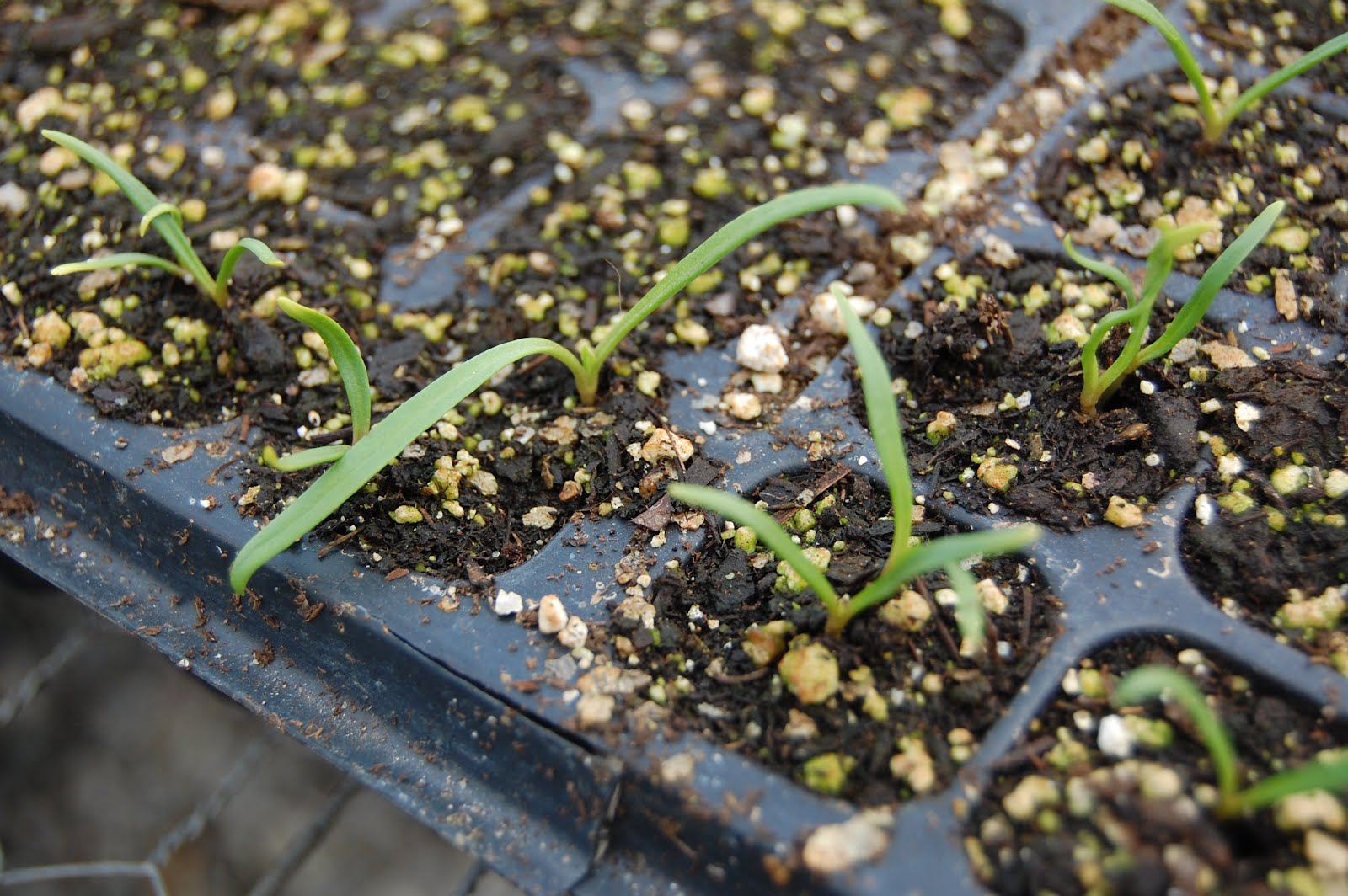
Baby spinach.


Support local farmers. Make as sure as possible that you know where your food is coming from. Strive to promote clear labeling of your food so that you don't unsuspectingly buy GMO's. (genetically modified organisms).

Support Bo at Eat More Kale.

Peace and healthy eating to one and all.


Thursday, March 22, 2012

SEEDING AND SEEDING AND SPROUTING

Seeding continues and continues. On 3/19 radicchio, spinach, beets and hot peppers were seeded. On 3/20 some more onions were seeded. And on 3/22 a few more onions, leeks, and a wide variety of herbs were seeded. Some of the herbs that will be grown this year includes, but is not limited to, oregano, thyme, anise hyssop, catnip, chives, lemongrass, and rosemary. And going back to hot peppers, Z Food Farm will be growing upwards of 22 varieties. At the hot end of the scale there will be, among others the Jamaican Hot Chocolate, Red Savina, and Fatali. Of varying degrees of heat there will be a cherry hot pepper, a serrano, a jalapeno, and a couple of paprika peppers. As last year David will be growing the shishito (a Japanese pepper), piquillo (Spanish pepper), and the padron peppers.

The shishito is a smallish green colored pepper, about the length of a serrano. They are intended to be cooked in oil until they start to blister. Once done cooking sprinkle on a little sea salt and enjoy. The cooking really enhances their flavor and are served as a tapas. The unique feature of the pepper is that every once in a while one of them will bring the heat. And the catch is, you don't know which one. Sort of like playing pepper roulette. The shishito turned out to be a big hit last year.

The padrons (which look like a smaller version of a green pepper) are prepared the same as a shishito. The frequency of finding a 'surprise' hot padron is a little more than the shishito. However, there is a limited window in which to harvest the padron before ALL of them become hot. This was not known to David last year and a couple of friends were surprised (to say the least) when they started biting into them. This year will be different.

Piquillo peppers have a sweet-spicy flavor. They are not commonly available fresh. They can be found in stores having been roasted over embers, peeled, deseeded and packed in olive oil. They are most commonly stuffed with cheese, meat, or seafood and served as a tapas. Last years harvest was not great and those that were brought to market did not catch on. It is hoped that people will give these delicious peppers more of a try this coming season.

The most exciting news to report today is that there has been a tremendous amount of germination!! It is always exciting when the new growth starts to emerge from within the soil. Even when you know that you have good seed and a good soil mix in which to plant the seed, there is always some anxiety in anticipation of whether or not there will be growth. While there will be a version of this feeling of anticipation throughout the season, the first seeding is the source of the greatest nervousness. And the greatest sense of relief. Here's to ongoing seeding and successful growing.

While this angle doesn't fully provide perspective, the greenhouse is steadily filling up.


Baby cauliflower.


Baby onions.


Baby lettuce. Most seeds are covered with the soil mix. Some plant varieties require a little more light and are covered with vermiculite; lettuce is one of those.


This shows the contrast between those seeds covered with soil mix and those covered with the vermiculite.


Healthy eating to one and all. Support local farmers.

Monday, March 19, 2012

KEEP ON SEEDING

On Sunday, March 18 the rapid pace of seeding continued. Various varieties of lettuce, kohlrabi, escarole, celtuce, kale, and Swiss chard were seeded. To give a sense of what was accomplished, 24 flats of kale alone were seeded. Good conversation, good music playing, some periods of silence, and generally pleasant weather made for a very enjoyable day.

One other thing. In case you were wondering, celtuce, also known as stem lettuce, is a form of lettuce that is grown primarily for its thick stem and used as a vegetable. It is crisp, moist, and mildly flavored. It is typically prepared by slicing and then stir frying with more strongly flavored ingredients. (Wikipedia) The celtuce that David grew last year was used by the Princeton restaurant, Elements. The hope this season is to bring some to the markets in addition to providing some for Elements.

What follows are three pictures that hopefully conveys how quickly the greenhouse fills up. The best way to get a sense of how the greenhouse is filling up is to compare these pictures with the pictures that were in the preceding post.


All associated with Z Food Farm are excited by the start of the season and anticipation is running high for the onset of markets in a little over two months time. Looking forward to seeing you at the farm, in New York and Philadelphia.

Peace and healthy eating to all.

Sunday, March 18, 2012

SEEDING

Mindfulness- "bringing one's complete attention to the present experience on a moment-to-moment basis."
In the beginning of a farm season there is seeding. In the middle of the farm season there is seeding. There is more seeding late into the farm season. Though there are lulls during the course of the season, seeding is a constant part of a farm season. This might be stating the obvious, but paying attention to the obvious is a vital part of productive farming. Seeding can often 'seem' to be a tedious, mind numbing, and boring process. But if viewed from a different perspective, seeding is an act that helps one to slow down, to pay attention, and to concentrate ones focus on a crucial task. Seeding requires patience and paying attention to what is being done. If you get caught up in the notion that the repetitive nature of seeding is a chore, you will be miserable. If you accept that seeding is part of the natural process of farming to be embraced, you enhance the likelihood of enjoying and appreciating the intrinsic value of seeding. If you take your positive attitude further, to the level of mindfulness, seeding can become an act of meditation. In this context, if you pay very close attention to what you are doing as you seed, the act of seeding can be relaxing, peaceful, and very satisfying.

A little behind schedule, seeding has started at Z Food Farm. On 3/16 onions, scallions, and shallots were seeded. On 3/17 cabbage. cauliflower, parsley, mitsuba (Japanese parsley), celery, broccoli, broccoli raab, collards, piracicaba (a different type of broccoli). and fennel were seeded. By staying focused ont he task at hand, by bringing one's attention to the present experience, you are able to derive a sense of personal value and a sense of pleasure and satisfaction in accomplishing a great deal in a relatively short period of time. Being mindful is a conscious act that can lead to a sense of pride in the doing and the completing of seeding.

And so it begins again. The ongoing cycle of the seasons and the beginning of the farm season. For those interested in the quality of their food, get to know where your food comes from. Shop local at farmers' markets and get to know the vendors, get to know the people who are working hard to provide you with the fruit/produce of their hard labor. Shop local. Buy organic when possible. Support small, local sustainable farms.

Good health and good eating to all.


Ye olde compost pile. Last years leftovers. Yes, that is 'stuff' growing out of the pile.


This is the soil mix that is used for seeding. It contains peat moss, compost, vermiculite, perlite, greensand, blood meal, bone meal, and limestone. The various additives are approved for organic farming and help provide the nutrients that will aid in the germination and growth of seeds into plants.


Day one seeding. Onions, scallions, and shallots. This may not have the appearance of being a lot of seeding. What you should know is that each of the flats you see has 288 cells. And each cell has 5 seeds. Do the math, what you see is a great deal of seeding.


Seeding, day 2. Varieties seeded on this day were: broccoli, broccoli raab, piracicaba (a special type of broccoli, cauliflower, cabbage, fennel, celery, parsley, and fennel.


Stay tuned. Much more to come.

Peace and good health to all.